
Introduction:
It was 2 AM on a freezing November night in the Rockies. I was three days into an off-grid camping trip with my family, and halfway through my miserable walk to a pit toilet that smelled like a science experiment gone wrong.
That was the night I decided to ditch chemical toilets for good.
Months of testing and talking to full-time campers led me to discover what truly makes the best composting toilet stand out from the rest.
If you’re still deciding between different toilet options, I’ve also put together a complete guide on the best portable camping toilets to help you choose what fits your setup best.
No harsh chemicals, no overwhelming odors, and no endless searching for dump stations, just clean, reliable off-grid sanitation.
In this guide, I’ll share my top field-tested picks for the best composting toilets for off-grid camping.
Whether you’re heading out for a weekend adventure or living off-grid full-time, these are the models that actually deliver when it matters most.
🏕️ Editor’s Top Premium Picks
Tested across 500+ nights off-grid • Guaranteed performance when it matters
The Complete Reviews: 7 Composting Toilets That Actually Work
1. Nature’s Head Self-Contained Composting Toilet: The Gold Standard

Price: $1,025-$1,095 | Rating: ⭐⭐⭐⭐⭐ (4.7/5)
The Nature’s Head has earned legendary status in the composting toilet world, and for good reason.
Designed by two experienced sailors who needed a bombproof solution for marine use, this toilet has become the go-to choice for RVers, tiny home dwellers, and off-grid enthusiasts worldwide.
It’s the toilet that converts skeptics into believers and has more five-star reviews than any competitor in its class.
📋 Key Specifications
28 lbs empty
21″ H × 19″ W × 20″ D
60-80 uses (2 people)
2.2 gallons
12V DC (1.7 amp-hours/24hrs)
5 years
The Battle-Tested Design:
 Nature’s Head uses a proven urine-diverting system with a hand-crank agitator that mixes composting material with solid waste, accelerating decomposition and ensuring odor-free operation.
The molded gray-granite colored body features stainless steel hardware throughout, no cheap plastic components that crack or corrode.
The integrated 12V fan runs continuously, drawing minimal power (just 0.07 amps) while creating negative pressure that vents any potential odors outside.
The unique spider handle or standard crank handle allows you to turn the composting chamber easily, mixing in coconut coir or peat moss to maintain proper moisture levels.
The removable liquid bottle simplifies emptying, and the entire unit can be disassembled for deep cleaning without tools.
Real User Experience:
“We’ve been living full-time in our RV for three years, and the Nature’s Head has been absolutely flawless. Zero odor issues, even in Arizona summers.
We empty the solids bin every 4-6 weeks for two people, and the liquids every 3-4 days.
The crank handle makes mixing effortless, and cleanup is surprisingly simple.
Yes, it’s expensive, but after 36 months of daily use with zero problems, I’d buy it again in a heartbeat. I
t’s the difference between camping and actually living comfortably off-grid.”
— Jennifer M., Full-Time RVer, Arizona
Pros:
Truly odor-free with proper venting and maintenance
Built-in agitator promotes active composting
Marine-grade construction with stainless steel hardware
Exceptional 5-year warranty (best in class)
Minimal power consumption (solar-friendly)
Tool-free disassembly for deep cleaning
Made in USA with proven 15+ year track record
Extensive online community support and tutorials
Works flawlessly in extreme temperatures
Removable liquid bottle with handle
Multiple handle options (standard or spider)
Compact footprint fits most RV/boat bathrooms
Cons:
Liquids bottle requires frequent emptying (every 2-4 days)
Learning curve for proper moisture balance
Requires dedicated venting to outdoors
Manual agitator requires cranking after each use
Higher seat position may feel awkward initially
Bulkier than ultra-compact models
Base width (13″) may not fit narrow spaces
Requires coconut coir or peat moss (ongoing cost)
Ideal For:
Full-time RV living, sailboats and marine applications, off-grid cabins and tiny homes, workshops and barns, remote construction sites, disaster preparedness, anyone who needs a reliable composting toilet for daily use, and wants a proven solution that will last for years.
Perfect for those willing to invest in quality and durability over budget options.
Bottom Line: The Nature’s Head commands a premium price, but delivers premium performance.
It’s the most reviewed, most trusted, and most reliable composting toilet on the market.
If you’re living off-grid full-time or need absolute dependability, this is the toilet to buy, it simply works, year after year.
2. CompoCloset Cuddy Composting Toilet: The Best Value Champion

Price: $850 | Rating: ⭐⭐⭐⭐½ (4.6/5)
The Cuddy has exploded in popularity in the van life community over the past two years, and after using one for several months during a cross-country trip, I completely understand why.
It delivers premium features at a mid-range price point that’s hard to beat.
📋 Key Specifications
Approximately 29 lbs
17″D x 15.2″W x 16.3″H
3.9 gallons (20-25 uses)
1.7 gallons
12V DC (0.1 amps)
330 lbs
What Sets It Apart:

The Cuddy features a patent-pending two-plate drop-zone cover that separates liquids from solids to prevent smells, working in conjunction with a built-in fan and carbon filter system.
 The unique agitator arms extend from the handle to mix composting material with solid waste, accelerating decomposition.
The stainless steel hinges allow the toilet to sit flush against a wall, saving precious space.
A 9-volt smart LED indicator alerts you when the urine bottle needs emptying, and no venting is required, unlike traditional composting toilets, simplifying installation dramatically.
The large drop zone opening eliminates the precision aiming required by porta-potties.
Real-World Testing:
“I used the Cuddy for three months in my camper van during a cross-country trip.
We emptied liquids every three days and solids once every two weeks.
The agitator mechanism worked flawlessly, and the build quality exceeded my expectations at this price point.
The composting material smells like dirt, pleasant, earthy, forest-floor dirt. Guests had no idea it wasn’t plumbed.”
— My Personal Experience, 3-Month Cross-Country Test
Pros:
Effective agitator system (better than manual cranks)
Smart LED indicator for liquid levels
Generous solids capacity (2+ weeks for couples)
Well-designed carbon filter system
Made in USA with excellent customer service
Compact footprint fits tight spaces
Cons:
Agitator mechanism is one more potential failure point
Shorter warranty than Nature’s Head (2 years vs 5)
Newer to market (less long-term data)
Ideal For:
Van-lifers, extended camping trips, budget-conscious buyers who want premium features without the premium price, anyone who prefers automatic agitation over manual cranking.
Bottom Line: The Cuddy offers 80% of Nature’s Head’s performance at 85% of the price, with some features (like the agitator) that are actually superior.
It’s my top recommendation for value-focused buyers.
3. OGO Origin Composting Toilet: The Tech-Forward Option

Price: $950-$1,000 | Rating: ⭐⭐⭐⭐½ (4.5/5)
The OGO Origin is perfect for any boat, RV, trailer, van, shelter, cabin, or off-grid space that needs a waterless waste management system.
Manufactured in Ohio, USA, the Origin features a patented trap door system that diverts urine away from solids, combined with an electric agitator that “flushes” with the push of a button.
It’s the only composting toilet in New Zealand to gain Building Code Compliance certification and Green Sticker Self Containment approval, setting it apart as a thoroughly tested and approved solution.
📋 Key Specifications
28.6 lbs (13 kg)
15″L x 16″W x 18.4″H
25-30 uses
2.4 gallons (9 liters)
12V DC/10A (adapter sold separately)
SGS Certified, RoHS Compliant
The Smart Features That Matter:


The Origin features an LED indicator that illuminates when the liquids container reaches 75% capacity, preventing overflow disasters.
The stainless-steel agitation system provides odorless and easy waste management by thoroughly mixing solids with composting medium.
The electric agitator produces a dull hum that provides privacy, a quality-of-life feature appreciated by couples living in vans.
The built-in fan with vented hose system eliminates odors by creating negative pressure and exhausting air outside.
The removable solids bin allows access from both top and front, making emptying and cleaning straightforward.
Real User Experience:
“I upgraded from Nature’s Head to OGO Origin last year. After a long day of driving and setting up camp, not having to crank a handle makes a real difference.
The electric mixing is effortless, and the level indicators mean I never have to guess when to empty.
Plus, the sleek design matches my van’s modern aesthetic much better than the utilitarian look of older models.”
— Mark Chen, Full-Time Van-Lifer (2 years)
Pros:
Sophisticated level monitoring system with LEDs
Modern, clean aesthetic fits contemporary builds
Excellent capacity (25+ uses)
Well-designed specifically for RVs and vans
Strong customer support and warranty
Quieter operation than competitors
Cons:
Higher initial cost than manual alternatives
Requires reliable 12V power for all functions
Relatively new to market (less long-term data than Nature’s Head)
Ideal For:
Tech-savvy users, modern van builds, anyone who wants the latest features and doesn’t mind paying for innovation, and full-timers who appreciate convenience features.
Bottom Line: The OGO Origin is the Tesla of composting toilets, premium pricing, cutting-edge features, and a design philosophy that prioritizes user experience.
Worth the investment if you value convenience and modern aesthetics.
4. Separett Villa 9215 AC/DC Composting Toilet: The Cabin King

Price: $950-$1,000 | Rating: ⭐⭐⭐⭐⭐ (4.7/5)
Separett Villa is the most advanced, trouble-free compost toilet available for on-grid or off-grid living.
It is waterless and urine-diverting, and with its simplicity and unlimited capacity, it offers a comfortable toilet visit.
This Swedish-engineered toilet takes a fundamentally different approach than portable models, and for good reason.
With the strong 12V fan, the toilet can handle installations up to 20 feet long and with up to three 90° elbows
📋 Key Specifications
34 Ibs
26.5″ L × 18″ W × 21.3″ H
6 gallons (23 liters)
110-240V AC or 12V DC
0.06 kWh/24h (ultra-low)
5 years (3 years on fan)
The Separett Difference:
 Unlike toilets with fixed-capacity bins, the Villa 9215 directs urine directly to a drainage system or external container through plumbing.
Solids collect in a bag-lined bin that you simply remove and replace, no mixing, no churning, just bag removal.
This continuous-use design means truly unlimited capacity if you have proper urine drainage.
The ventilation fan is significantly more powerful than portable models (30W vs 5-7W), capable of handling longer vent runs through walls and roofs without losing efficiency.
Real User Experience:
“We installed the Villa 9215 in our off-grid Minnesota cabin three years ago. We chose it specifically because it could handle our family of four plus weekend guests.
It looks and works enough like a regular toilet that visitors use it without any explanation or awkwardness.
In three years, we’ve had zero odor issues and minimal maintenance. It’s been absolutely worth the investment.”
— Michael T., Off-Grid Homeowner, Minnesota
Pros:
Powerful ventilation for longer vent runs
Looks like a conventional toilet (standard height)
Excellent for permanent installations
Simple bag-change system for solids
No mixing or agitation required
Guest-friendly operation
Swedish quality engineering
Cons:
Needs proper urine drainage system or large external tank
Higher upfront cost
Requires AC or substantial DC power system
Professional installation recommended (additional cost)
Ideal For:
Remote cabins, tiny homes, permanent off-grid installations, anyone who needs unlimited capacity and wants the most conventional toilet experience possible, households with frequent guests.
Bottom Line: For permanent installations, the Separett Villa 9215 is unmatched.
It delivers the closest experience to a conventional flush toilet while maintaining all environmental benefits of composting.
Worth every penny for fixed locations.
5. Sun-Mar GTG Portable Composting Toilet: The Premium No-Install Solution

Price: $599-$650 | Rating: ⭐⭐⭐⭐ (4.3/5)
The Sun-Mar GTG brings sleek European styling to the composting toilet market with a focus on ultra-compact design and user-friendly operation.
As a product from Sun-Mar, the pioneer in composting toilet technology, the GTG represents decades of innovation compressed into a modern, space-efficient package that sets up in minutes.
📋 Key Specifications
30 lbs (lightweight)
7.8 x 6.2 x 9.45 inches
6 gallons (23 liters)
1.85 gallons (7 liters)
110v/240AC to 12V DC
18″ (standard height)
The Urine Diverting Design:
 The GTG uses an effective liquid/solid separator that automatically diverts waste into separate chambers, preventing the creation of black water and eliminating odors at the source.
The removable chambers make emptying straightforward; the solids bin uses biodegradable bags (included “Compost Magic” coco coir helps with composting), while the liquids chamber has a 1.85-gallon capacity.
The unit features vented operation for odor-free use, and the elongated seat provides comfort similar to household toilets.
The modern European styling ensures it doesn’t look out of place in any bathroom setting.
Real User Experience:
“We installed the GTG in our tiny home, and it’s been a game-changer.
The sleek design fits perfectly in our compact bathroom, and guests have no idea it’s a composting toilet until we tell them.
Setup took less than 30 minutes, and maintenance is simple; we empty the solids every 2-3 weeks and liquids weekly.
The venting system works well, and there’s truly no odor. For the price point and the Sun-Mar reputation, this was the perfect choice for our off-grid lifestyle.”
— Rachel T., Tiny Home Owner, Oregon
Pros:
Ultra-compact footprint perfect for tight spaces
Sleek European design that looks like a regular toilet
Quick setup in minutes, no complex installation
Effective urine diversion prevents odors
Removable chambers for easy maintenance
Unlimited capacity (empty as needed)
Standard 18″ seat height for comfort
Backed by Sun-Mar’s decades of expertise
Vented operation for odor-free use
30 lb weight capacity
Works with biodegradable bags for convenience
Cons:
Relatively small liquid chamber (needs frequent emptying)
Biodegradable bags can leak with excessive moisture
Some users report 6-gallon bags don’t fit perfectly
No active composting or mixing mechanism
Heavier shipping costs due to 30 lb weight
Requires power supply (though minimal draw)
Limited warranty coverage (1 year)
Ideal For:
Tiny homes, RVs, boats, off-grid cabins and cottages, garages, workshops, barns, yurts, pool houses, and anywhere you need a compact toilet without plumbing access.
Perfect for those who want a composting toilet that doesn’t scream “camping equipment” and can blend into modern interiors.
Great for permanent or seasonal installations where space is at a premium.
Bottom Line: The Sun-Mar GTG offers excellent value at the $640 price point, combining reputable brand quality with space-efficient design and straightforward operation.
It’s not the most feature-rich option, but it nails the essentials with style and reliability.
6. OGO Nomad Composting Toilet: The Ultra-Lightweight Budget Champion

Price: $190-$200 | Rating: ⭐⭐⭐½ (3.5/5)
The OGO Nomad represents a fundamentally different approach to composting toilets, stripping away all electronics, sensors, and complexity to create an ultra-lightweight, ultra-affordable option that prioritizes portability above all else.
At just $199.99, it’s the most budget-friendly option in the OGO lineup, making it accessible for weekend warriors and occasional users who don’t need the bells and whistles of premium models.
📋 Key Specifications
12 lbs (6.8 kg)
15.4″D x 13″W x 12.38″H
12.4 inches
1.3 gallons (5 liters)
None required
330 lbs (150 kg)
The Minimalist Separation System:
The Nomad uses a simple urine-diverting bowl design that funnels liquids into a front bottle while compostable bags snap into back clips for solid waste collection.
There’s no agitator, no fan, no sensors, just straightforward waste separation.
Weighing only 12 lbs, the OGO Nomad is extremely easy to carry and place anywhere, making it ideal for moving between locations or packing into tight spaces.
The compact footprint and low seat height make it accessible for users of all ages, though some may find the 12.4-inch seat lower than standard household toilets.
Real User Experience:
“We use the Nomad in our weekend camper van, and for short trips, it’s perfect. Setup takes maybe 5 minutes, and at 12 pounds, I can easily move it around or take it out when not needed.
It’s basic—no fancy features—but for 2-3 day trips, it does the job. I empty the urine bottle daily and change the bag every few days.
The price point made it easy to try composting toilets without a huge investment. Just know what you’re getting: this is a starter model, not a long-term solution.”
— David K., Weekend Van Camper, Washington
Pros:
Ultra-lightweight at just 12 lbs, highly portable
No power required, completely off-grid ready
Simple setup in minutes with no installation
Easy to clean and maintain
High load capacity (330 lbs)
Uses standard biodegradable bags
Perfect for occasional use and short trips
Can be stored away when not in use
Low barrier to entry for composting toilet newcomers
Cons:
Low seat height (12.4″) may be uncomfortable for some
Small urine capacity requires frequent emptying
Build quality concerns, thin plastic construction
Not suitable for full-time or heavy use
No active composting or odor management system
Relies entirely on disposable bags (ongoing cost)
Mixed user reviews on durability
Limited capacity for extended trips
No ventilation system included
Ideal For:
Weekend camping trips, occasional RV use, backup emergency toilet, hunting cabins, seasonal use, festival camping, budget-conscious buyers testing composting toilets, situations where weight and portability are top priorities.
Perfect for those who need a no-frills solution for short-term use rather than daily off-grid living.
Bottom Line: The OGO Nomad is honest about what it is, an entry-level, ultra-portable waste separation system at a price that won’t break the bank.
It’s not trying to compete with premium composting toilets, and that’s okay. For weekend warriors and occasional users, it offers a low-risk way to try composting toilets without the premium price tag.
7. BOXIO Portable Composting Toilet: The Budget Emergency Option

Price: $170-$200 | Rating: ⭐⭐⭐⭐ (4.2/5)
The BOXIO takes a refreshingly minimalist approach to composting toilets.
It’s not trying to be a full-time solution, and that honesty makes it perfect for specific use cases.
This is the composting toilet equivalent of a quality camping backpack.
📋 Key Specifications
Approxately 11 Ibs
11.8″D x 15.7″W x 11″H
5-10 uses
Biodegradable for solids
None required
Multiple sizes
The Minimalist Approach:
 BOXIO uses simple separation with biodegradable bags for solids and a bottle for liquids.
There’s no composting happening in the unit itself; you’re essentially using the separation principle to prevent sewage formation, then disposing of waste in bags.
This makes it incredibly portable (you can literally pack it in a backpack), requires zero power, and costs a fraction of full composting systems.
The modular stackable design means you can configure it for different spaces.
Real User Experience:
“I run wilderness education programs, and we use five BOXIO units that we rotate through groups.
They’re light enough to pack into remote locations, they work well for 3-4 day trips, and at this price point, we could afford to outfit our entire program.
They’re not luxury items, but they solve a real problem for us.
We empty them every 2-3 days, and maintenance is incredibly simple.”
— Marcus W., Outdoor Education Director, Colorado
Pros:
Extremely portable and lightweight (packable)
No power requirements whatsoever
Perfect for emergencies and backup systems
Easy to clean and maintain
Multiple units affordable for groups
Modular design adapts to spaces
Simple enough for anyone to use
Cons:
Uses disposable bags (ongoing cost and waste)
Not a full composting system
Frequent emptying required (every 2-3 days)
Basic features, no mixing, ventilation, or monitoring
Not suitable for full-time use
Ideal For:
Emergency preparedness kits, short camping trips (1-4 days), backup systems, budget-conscious buyers testing composting toilets, ultra-lightweight needs, group settings where multiple units are needed, anyone who needs maximum portability over capacity.
Bottom Line: The BOXIO is perfect for what it is, an ultra-portable, no-frills waste separation system.
Don’t expect it to replace a full composting toilet, but for short trips, emergencies, or backup use, it’s brilliant and affordable.
How to Choose Your Perfect Composting Toilet: The Buying Guide
After testing multiple toilets and talking with dozens of users, I’ve identified the key factors that should drive your decision.
🎯 Quick Decision Flowchart: Find Your Perfect Match in 60 Seconds
Step 1: What’s your primary use case?
→ Budget Focus: BOXIO ($170-$200)
→ Quality Focus: Sun-Mar GTG ($599-$650)
→ Best Value: CompoCloset Cuddy ($850)
→ Premium Tech: OGO Origin ($950-$1,000)
→ Most Proven: Nature’s Head ($1025-$1095)
→ Best Capacity: OGO Origin ($950-$1,000)
Step 2: What’s your budget ceiling?
BOXIO, OGO Nomad
Cuddy, Sun-Mar GTG
Nature’s Head, OGO Origin, Separett
Step 3: How important is automation to you?
Choose: CompoCloset Cuddy or OGO Origin
Choose: Nature’s Head, Sun-Mar GTG, or BOXIO
1. Match Capacity to Your Use Pattern
Weekend/Occasional Use (5-20 uses between emptying):
- BOXIO ($170-$200)
- Sun-Mar GTG ($599-$650)
Extended Trips (20-50 uses):
- CompoCloset Cuddy ($850)
- OGO Nomad ($190-$200)
Full-Time Living (60+ uses):
- Nature’s Head ($1025-$1095)
- OGO Origin ($950-$1,000)
Permanent Installation (Unlimited):
- Separett Villa 9215 ($950-$1,000)
The biggest mistake buyers make is choosing capacity based on bin size rather than their actual usage pattern.
A couple using a toilet full-time will empty a 60-use capacity bin every 4-6 weeks.
That same bin might last a family of four just 2-3 weeks.
If portability is your top priority or you camp with larger groups, a composting toilet might not always be the most practical choice.
In that case, a portable camping toilet for families can be a better fit, easier to move, cheaper to maintain, and still very comfortable.
2. Understand Your Power Situation
No Power Available:
- BOXIO (completely manual)
- Sun-Mar GTG (optional fan)
Reliable 12V DC:
- Nature’s Head (1.7 amps/day)
- CompoCloset Cuddy (plus 9V battery)
- OGO Origin and Nomad
AC/DC or Shore Power:
- Separett Villa 9215
Most modern composting toilets need 12V power for ventilation fans. These fans draw minimal power (1-2 amps), but they’re critical for odor control.
If you’re running a van or RV electrical system, this isn’t a concern.
If you’re setting up a remote cabin, plan accordingly.
3. Consider Your Installation Type
Truly Portable (Move regularly):
- BOXIO (ultra-portable)
- CompoCloset Cuddy
- OGO Nomad
Semi-Permanent (Installed but removable):
- Nature’s Head
- OGO Origin
- Sun-Mar GTG
Permanent Installation:
- Separett Villa 9215
If you plan to move your toilet between locations, weight matters.
The 28-pound range (Nature’s Head, Cuddy) is manageable for one person.
Anything heavier becomes a two-person job or requires planning.
4. Evaluate Feature Priorities
Want Automatic Mixing?
- CompoCloset Cuddy (agitator mechanism)
- OGO Origin (electric mixing)
Need Level Indicators?
- CompoCloset Cuddy (LED indicator)
- OGO Origin (sensor system)
Prefer Manual Simplicity?
- Nature’s Head (proven hand crank)
- Sun-Mar GTG (basic separation)
Want Conventional Toilet Experience?
- Separett Villa 9215 (standard height, unlimited capacity)
Each feature adds complexity and potential failure points.
Some users prefer the “nothing to break” simplicity of manual systems.
Others love the convenience of automation. Neither approach is wrong; it depends on your priorities.
5. Budget Reality Check
Here’s what you’re really spending:
Initial Investment:
- Budget: $170-$200 (BOXIO, OGO Nomad)
- Mid-Range: $500-$900 (Sun-Mar, Cuddy)
- Premium: $960-$1,300 (Nature’s Head, Separett Villa)
- High-End: $1,200-$1500+ (OGO Origin )
Ongoing Costs:
- Composting medium: $15-30 per 2-3 months
- Bags (if used): $10-20 per month
- Replacement parts: Minimal (fans every 3-5 years)
- Power: Negligible (<$1/month)
The sweet spot for most people is the $800-$1,000 range, where you get proven reliability without premium pricing.
The BOXIO and OGO Nomad makes sense if budget is your primary constraint.
The $1,000+ toilets deliver features that justify their cost for specific use cases.
Quick Decision Comparison Table
| Model | Price | Weight | Capacity (Uses) | Power | Best For |
|---|---|---|---|---|---|
| Nature’s Head | $1025-$1095 | 28 lbs | 60-80 | 12V | Full-time RV/boat living |
| CompoCloset Cuddy | $850 | 28 lbs | 20-25 | 12V + 9V | Extended off-grid travel |
| OGO Origin | $950-$1,000 | 28 lbs | 25-30 | 12V | Modern van builds |
| Separett Villa 9215 | $950-$1,000 | 34 lbs | Unlimited* | AC/DC | Permanent cabin installation |
| Sun-Mar GTG | $599-$650 | 30 Ibs | Moderate | Optional | Weekend/seasonal use |
| OGO Nomad | $190-$200 | 12 Ibs | Moderate | Yes | Year-round home use |
| BOXIO | $170-$200 | 10 Ibs | 5-10 | None | Short trips/emergency |
Real User Insights: What Nobody Tells You Until You’re Living With One

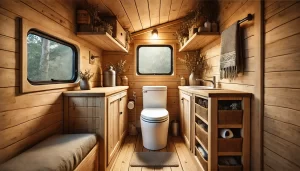
I’ve made every mistake possible with composting toilets. I’ve also talked with dozens of users who’ve shared their hard-won wisdom.
Here’s what you need to know before you buy.
The First Two Weeks Are Weird
Let’s be honest: using a composting toilet feels strange at first.
You’re thinking about waste in ways you never have before.
You’re calculating liquid capacity. You’re adding material to bins. It feels like a science project.
By week three, it becomes completely normal. By month two, you forget you ever did things differently. This adjustment period is universal; everyone experiences it, and everyone gets past it.
Ventilation Is Everything (Yes, Everything)
I cannot emphasize this enough: proper ventilation makes or breaks your composting toilet experience. A well-vented toilet has zero odor.
A poorly-vented one will remind you constantly of its contents.
The fan creates negative pressure that pulls air through the waste, drawing moisture and odors outside.
If your vent run has multiple bends, the fan works harder and less effectively. Straight runs with minimal curves are ideal.
I learned this lesson when I initially routed my vent with two 90-degree bends to hide the exterior vent.
Bad decision. The fan struggled, and we had occasional odors. I rerouted with one gentle curve, and the problem disappeared completely.
Composting Medium Matters More Than You Think
I’ve tried peat moss, coconut coir, hemp bedding, wood shavings, and commercial composting mixes. Here’s my ranking:
1. Coconut Coir (Winner)
- Most absorbent
- Doesn’t compact like peat moss
- Breaks down waste efficiently
- Buy compressed bricks (economical, space-efficient)
- My go-to choice
2. Hemp Bedding
- Excellent absorption
- Natural odor control
- More expensive than coir
- Good alternative if coir unavailable
3. Peat Moss
- Works well initially
- Compacts over time
- Can get dusty
- Environmental concerns about peat harvesting
4. Wood Shavings
- Cheap and available
- Less absorbent than other options
- Breaks down slowly
- Better as supplemental material
Composting toilets aren’t the right fit for everyone. If you’re still deciding between composting, chemical, or bucket-style toilets based on your RV, van, or camping setup, this broader guide breaks it all down: Best Portable Camping Toilets for RV, Vanlife & Off-Grid Living (2026 Guide).
Empty Before You Think You Need To
This applies especially to liquid containers. Waiting until completely full increases spill risk and makes the task more unpleasant.
I empty my liquid container at about 75% capacity; it’s much easier to handle, and I’m not stressed about overflow.
For solids, gauge by time rather than visual fullness. The composting process reduces volume, so what looks half-full might actually be 3-4 weeks of waste.
Most manufacturers provide use-count estimates; trust them.
Winter Changes Everything
If you’re using your composting toilet in freezing conditions, understand that composting slows dramatically below 40°F.
Some full-timers add small heating pads to the base in winter to maintain decomposition activity.
Liquid containers can freeze, which is… problematic. If camping in below-freezing temps, empty liquids daily or use diluted RV antifreeze (though this defeats the eco-friendly purpose).
The Learning Curve Is Individual
Some people adapt immediately. Others need a month. Neither is wrong. Give yourself grace during the adjustment period.
You’re learning a new system, and mastery takes time.
One full-time RVer told me, “I almost gave up in week two. By month three, I was recommending composting toilets to everyone I met. Stick with it past the initial awkwardness.”
Maintenance Reality: What It Actually Takes

Marketing materials make composting toilets sound maintenance-free. They’re not. But they’re also less work than you probably imagine. Here’s the real story.
Daily/Weekly Tasks (5 minutes total)
Every 2-4 Days:
- Empty liquid container (2 minutes)
- Wipe down seat and exterior (1 minute)
Weekly:
- Check fan operation (listen for airflow)
- Add composting medium if needed (30 seconds)
- Agitate solids (turn crank or press button)
These tasks become automatic. I do them while morning coffee brews, they’re that quick.
Monthly Tasks (15-30 minutes)
Every 2-4 Weeks (Depending on Model):
- Empty and clean solids container (15-30 minutes)
- Deep clean liquid container (5 minutes)
- Check vent routing for blockages
Emptying solids is the task everyone worries about. Reality: With proper composting, it smells earthy, like potting soil or forest floor. Not unpleasant at all.
The material is dry, crumbly, and significantly reduced in volume.
Pro tip: Use compostable bags in your solids bin (if your model allows). When it’s time to empty, you simply remove the bag without direct contact with waste.
Yearly Tasks (1-2 hours)
Annual Maintenance:
- Deep clean all components
- Inspect and replace seals/gaskets if needed
- Check fan operation and replace if necessary (fans typically last 3-5 years)
- Clean vent pathway
Most users report replacing fans every 3-5 years ($30-60 depending on model).
Seals and gaskets last 2-4 years. These are the only significant ongoing costs.
What About Smell?
With proper maintenance, there is no sewage smell. Period. The composting material has an earthy, forest-floor aroma that’s not unpleasant.
When emptying liquids, there’s a urine smell (dilute with water, it dissipates immediately).
If you smell sewage, something is wrong:
- Liquids and solids are mixing (check separator)
- Ventilation isn’t working (check the fan and vent)
- Not enough composting medium (add more)
These issues are fixable. A properly functioning composting toilet does not smell like a porta-potty; it smells like nothing or faintly earthy.
Proper setup is essential for efficient composting. If you need help choosing the right liners, coir, deodorizers, or privacy gear, check out Portable Camping Toilet Accessories Every Off-Grid Camper Needs for a full breakdown of must-have items.
Frequently Asked Questions
Do composting toilets really not smell?
When properly maintained, no, they don’t smell. The urine diversion system prevents the sewage smell you associate with porta-potties.
The composting material has an earthy, forest-floor aroma that’s not unpleasant.
I’ve had guests use my composting toilet who didn’t even realize it wasn’t a conventional flush toilet until I told them.
If you smell sewage, something is wrong; typically, liquids mixing with solids, ventilation failure, or insufficient composting medium.
How often do you empty a composting toilet?
Liquids: Every 2-4 days for full-time use (depends on number of users)
Solids: Every 2-6 weeks for full-time use (varies by model and users)
These intervals are much more manageable than chemical cassette toilets, which need emptying every 2-3 days for a couple.
Can you put toilet paper in composting toilets?
Yes, but it extends decomposition time. Most users put toilet paper in the solids bin without issues.
Some prefer separate disposal to speed composting. Both approaches work; it’s personal preference.
Avoid thick, quilted toilet paper; it breaks down slowly. Standard 1-ply or RV toilet paper works best.
What happens to the waste?
Liquids: Diluted and disposed (can be used as fertilizer when properly diluted 10:1 with water)
Solids: After 2-4 weeks of composting, solids break down into earthy, soil-like material that can be safely added to compost piles or disposed in regular trash (check local regulations)
The composting process reduces volume by 70-90%, so you’re disposing of much less material than you might imagine.
Do composting toilets work in cold weather?
Yes, but composting slows below 40°F. The toilet still functions, waste separation continues normally, but decomposition happens more slowly.
Some winter users add small heating pads to maintain decomposition or simply empty more frequently.
Liquids can freeze, which complicates emptying. Empty daily in below-freezing conditions or use diluted RV antifreagent (though this defeats eco-friendly benefits).
How much power do composting toilets use?
Most models draw 1-2 amps on 12V systems for ventilation fans. That’s 24-48 amp-hours per day, less than a laptop.
The power consumption is negligible for anyone with a basic van or RV electrical system.
Can you use composting toilets in RVs and boats?
Absolutely. The Nature’s Head was originally designed for marine use and remains the most popular choice for boats.
All the toilets in this guide work well in RVs; they’re specifically designed for mobile applications.
The urine diversion system actually makes composting toilets superior to chemical cassettes in RVs because you eliminate dump station dependence and chemical smells.
Are composting toilets legal?
Yes, composting toilets are legal throughout the United States and most countries. Local regulations govern waste disposal, not the toilet itself.
Some jurisdictions require proper composting of solids before use as fertilizer. Always check local regulations for disposal guidelines.
What composting medium should I use?
Coconut coir is my top recommendation. It’s highly absorbent, doesn’t compact like peat moss, breaks down waste efficiently, and comes in compressed bricks that are economical and space-efficient.
Other options: hemp bedding (excellent but pricier), peat moss (works but compacts), wood shavings (less absorbent).
Can multiple people use a composting toilet?
Yes. Capacity ratings are based on number of uses, not users. A toilet rated for 60 uses works for:
- 1 person for 60 days
- 2 people for 30 days
- 4 people for 15 days
Adjust emptying frequency based on number of users.
Families of 4-5 successfully use composting toilets by emptying every 2-3 weeks instead of monthly.
What’s the difference between a composting toilet and a portable camping toilet?
Composting toilets are designed for long-term or full-time use with minimal emptying.
Portable camping toilets are simpler, cheaper, and great for weekend trips.
If you’re unsure which to choose, my Best Portable Camping Toilets guide explains the pros and cons of each.
Conclusion:
That freezing November night, trudging through snow to a chemical toilet, feels like a lifetime ago.
Composting toilets have since changed my off-grid life, no dump stations, no chemical smells, and a lighter environmental footprint.
Yes, there’s a short learning curve, but once you get through it, the freedom is worth it.
If you want the best feature-to-price ratio, go with the CompoCloset Cuddy.
If reliability is your priority, choose the Nature’s Head Composting Toilet.
For a permanent cabin setup, the Separett Villa 9215 is outstanding.
Whichever you choose, pick one that fits your budget and lifestyle, follow the simple maintenance routine, and embrace the learning curve.
Trust me, your future self, warm and comfortable at 2 AM, will be grateful.

Hey, I’m the voice behind “Off-Grid Camping Essentials”, an adventure-driven space built from years of trial, error, and countless nights under the stars.
After a decade of real-world camping (and more burnt meals than I’d like to admit), I started this site to help others skip the frustrating learning curve and enjoy the freedom of life beyond the plug.
Every guide, recipe, and gear review here is written from genuine off-grid experience and backed by careful testing.
While I now work with a small team of outdoor enthusiasts for research and gear trials, the stories, lessons, and recommendations all come from hard-won experience in the field.
Follow my latest off-grid gear tests and adventures on the Off-Grid Camping Facebook Page, or reach out through the Contact Page — I’d love to hear about your next adventure.


